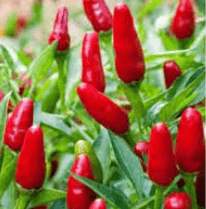
Bird’s eye chili pepper
Overview:
 Scientific name of Red bird’s eye chili is: Capsicum annuum var. glabriusculum
Family: Solanaceae (commonly known as the nightshade family)
Red bird’s eye chili, also known as bird’s eye chili or Thai chili. It is a small, fiery-hot chili commonly used in Southeast Asian cuisine.
A very spicy chili that is known for its intense heat and distinctive flavor, making it a staple in many cuisines in countries such as Thailand, Vietnam, Indonesia, and the Philippines.
If you handle them, it’s important to wear gloves, as their heat can irritate the skin and eyes.
Red bird’s eye chili pepper Description :
Appearance: These peppers are usually about 1-2 inches long, bright red when fully ripe, and have a narrow, curved shape.
Bird’s eye chili scoville: Bird’s eye chilies are very hot, measuring around 50,000 to 100,000 Scoville Heat Units (SHU).
Taste: They have a sharp, intensely hot flavor and a slightly fruity or sour taste, making them popular for adding spice to curries, sauces, soups, and stir-fries.
Culinary uses: Common in Thai, Vietnamese, Indonesian, and Filipino cuisines, they are used fresh, dried, or in paste. They are found in dishes such as pad Thai, tom yum soup, and sambal (a spicy chili paste).
Growing conditions: Bird’s eye chili plants thrive in warm, tropical climates and require plenty of sunlight. They can be grown in pots or in the garden with well-drained soil. The plants can be quite productive, producing large quantities of chilies each season.
Bird’s eye chili recipe
Spicy Thai Chili Paste (also known as Nam Prik Pao). This delicious recipe is commonly used in Thai cuisine to add heat and depth to various dishes
Spicy Thai Bird’s Eye Chili Paste (Nam Prik Pao)
Ingredients:
- 10-12 red bird’s eye chilies (adjust based on heat preference)
- 3-4 shallots, peeled and halved
- 4-5 cloves garlic, peeled
- 1 tbsp shrimp paste (optional, but gives a great umami flavor)
- 1/4 cup palm sugar (or brown sugar as a substitute)
- 2 tbsp fish sauce
- 2 tbsp tamarind paste (or juice from 1 small lime)
- 1/2 tbsp vegetable oil (for frying)
- 1 tbsp chopped cilantro (optional, for garnish)
Instructions:
- Roast the Ingredients:
- In a dry skillet or on a grill, roast the bird’s eye chilies, shallots, and garlic until they become soft and charred (about 5-7 minutes).
- Once roasted, let the chilies cool down, then remove the stems and peel the garlic and shallots.
- Prepare the Paste:
- In a mortar and pestle (or a food processor if you prefer), grind the roasted bird’s eye chilies, garlic, and shallots into a coarse paste. If you’re using a food processor, pulse until smooth but not too fine.
- Cook the Paste:
- In a pan, heat the vegetable oil over medium heat. Add the chili paste to the pan and stir-fry for about 2 minutes, letting the flavors meld and develop.
- Add Sweetness and Savory:
- Stir in the palm sugar, fish sauce, and tamarind paste. Cook for another 1-2 minutes, stirring constantly, until the paste becomes slightly glossy and the sugar dissolves.
- Adjust the Taste:
- Taste the chili paste. You should have a good balance of sweet, salty, and sour. Adjust with more fish sauce, sugar, or tamarind if needed.
- Serve:
- Once the paste is cooked and flavorful, transfer it to a jar or container.
- You can use it immediately or store it in the refrigerator for up to 1-2 weeks.
How to Use:
- Stir into curries: Add a spoonful to curries, soups, or stews for a rich, spicy flavor.
- As a dip: Serve with fresh vegetables, fried fish, or grilled meats as a dipping sauce.
- Add to noodles: Stir into noodle dishes like Pad Thai for an extra kick.
Red bird’s eye chili substitute
1. Thai Bird’s Eye Chili (Fresh or Dried)
- Heat: Same as red bird’s eye chili (50,000-100,000 SHU).
- Flavor: Slightly fruity, tangy, and very spicy.
- Substitute Tip: If you can find Thai bird’s eye chilies, they are the closest match in both flavor and heat.
2. Cayenne Pepper (Fresh or Ground)
- Heat: 30,000-50,000 SHU (slightly milder than bird’s eye).
- Flavor: Similar pungent heat, but with a less complex, more straightforward spice.
- Substitute Tip: Use fresh cayenne peppers for a closer match in texture, or use ground cayenne if fresh isn’t available. Adjust the quantity depending on desired heat.
3. Serrano Pepper
- Heat: 2,500-5,000 SHU (much milder).
- Flavor: Fresh, bright, and slightly grassy.
- Substitute Tip: While serranos are much milder, they still provide a good balance of heat and flavor. To increase the heat, you can use more serranos and include some seeds.
4. Jalapeño Pepper
- Heat: 3,000-8,000 SHU (milder than bird’s eye chili).
- Flavor: Fruity and tangy, with a noticeable heat.
- Substitute Tip: Jalapeños can work if you want a milder version of the dish. You can also use the seeds for more heat, though they are much less spicy than bird’s eye chili.
5. Habanero Pepper
- Heat: 100,000-350,000 SHU (much hotter).
- Flavor: Fruity and citrusy, with an intense heat.
- Substitute Tip: If you’re looking for a hotter alternative, habaneros can work, but be cautious, as they are significantly hotter. Use half the amount to prevent overwhelming heat.
6. Chili Paste or Sambal Oelek
- Heat: Varies depending on the brand, but usually around 2,000-50,000 SHU.
- Flavor: These pastes, made with ground fresh chilies, garlic, and vinegar, can provide similar heat and complexity. Sambal oelek has a slightly more fermented flavor, which is also common in bird’s eye chili preparations.
- Substitute Tip: You can use 1 tablespoon of sambal oelek or chili paste for every bird’s eye chili pepper called for.
7. Fresno Chili
- Heat: 2,500-10,000 SHU (milder than bird’s eye chili).
- Flavor: Similar to jalapeños but with a more pronounced smoky-sweet flavor.
- Substitute Tip: These peppers are a good alternative for a milder version of the dish, and they have a bright red color similar to bird’s eye chili.
8. Pequin Pepper
- Heat: 30,000-60,000 SHU.
- Flavor: Slightly smoky and tangy.
- Substitute Tip: Pequin peppers are a good alternative if you want a pepper with a similar heat profile, though they might have a different flavor undertone.
Bird’s eye chilli vs Scotch bonnet
1. Heat Level (Scoville Heat Units):
- Bird’s Eye Chili: These small, slender chilies pack a medium to high level of heat, ranging between 50,000 and 100,000 Scoville Heat Units (SHU). They are definitely on the spicy side but not the hottest peppers in the world.
- Scotch Bonnet: This pepper is known for its intense heat, typically ranging from 100,000 to 350,000 SHU. This makes it considerably hotter than bird’s eye chili, and it can be one of the spiciest peppers you’ll encounter.
2. Appearance:
- Bird’s Eye Chili: These chilies are small (1-2 inches long), thin, and pointed. They ripen to a bright red, although there are also varieties in yellow and orange. They’re often used fresh, dried, or made into pastes and sauces.
- Scotch Bonnet: Scotch bonnets are larger (about 2-3 inches) and resemble a small, squat bell pepper with a wrinkled texture. They have a distinctive bonnet-like shape (hence the name), and they come in a bright red, yellow, or orange color when ripe.
3. Flavor Profile:
- Bird’s Eye Chili: The flavor of bird’s eye chili is bright, tangy, and slightly fruity, with an immediate heat that quickly intensifies. The taste is sharp and pungent, with a clean, fresh spiciness that complements many dishes, especially in Southeast Asian cuisine.
- Scotch Bonnet: Scotch bonnets have a fruity, sweet, and tropical flavor. They are often described as having a floral undertone with hints of apple, citrus, or even mango. Despite their heat, Scotch bonnets have a distinct sweetness that balances the intense spice. This makes them unique, as the heat and sweetness often complement each other in Caribbean and African dishes.
4. Culinary Uses:
- Bird’s Eye Chili: Widely used in Southeast Asian cuisines like Thai, Indonesian, Filipino, and Indian cooking, bird’s eye chilies are used fresh, dried, or ground into pastes. They’re a staple in curries, stir-fries, sauces, and condiments like sambal or chili pastes. In Thai food, they add a sharp, fiery punch to curries, soups, and salads like som tum (green papaya salad).
- Scotch Bonnet: Commonly used in Caribbean, Jamaican, and West African cuisines, Scotch bonnets are frequently featured in hot sauces, salsas, jerk chicken, and stews. They are often pounded into pastes or blended with other ingredients like garlic, ginger, and onion to create flavorful spicy condiments. The sweetness and fruity notes of Scotch bonnets make them perfect for barbecuing, marinades, and grilling.
5. Growing Conditions:
- Bird’s Eye Chili: These plants thrive in tropical climates and prefer hot, humid weather. They can be grown in pots or gardens and require lots of sunlight and well-drained soil.
- Scotch Bonnet: Similar to bird’s eye chili, Scotch bonnet peppers grow best in tropical and subtropical climates. They are often cultivated in Caribbean regions, as well as parts of Central America and Africa. They are heat-loving plants that require ample sunlight and warmth to thrive.
6. Substitutions:
- For Bird’s Eye Chili: You could use Thai chili, cayenne pepper, or serrano pepper for a similar heat level and flavor.
- For Scotch Bonnet: A good substitute for Scotch bonnet in recipes would be Habanero peppers, as they have a similar heat level and flavor profile. You can also use Cayenne pepper for heat, though it lacks the fruity undertones of Scotch bonnets.
Bird’s eye chili Health benefits
Are Bird’s Eye Chili Peppers Healthy?
Bird’s Eye Chili Peppers, like other peppers, are quite healthy and offer several health benefits when consumed in moderation. They are packed with essential nutrients and bioactive compounds that can contribute to your overall well-being. Let’s discuss some of the important health benefits:
1. Rich in vitamins and antioxidants:
Vitamin C: Bird’s eye chili peppers are an excellent source of vitamin C, which is essential for immune function, skin health, and overall well-being.
Vitamin A: They also provide vitamin A, particularly in the form of beta-carotene, which supports eye health and immunity.
B-Vitamins: These peppers contain small amounts of B vitamins, including B6 and folate, which help with energy metabolism and red blood cell production.
2. Rich in capsaicin:
Capsaicin is the compound responsible for the spice in bird’s eye chili peppers.
It has a variety of health benefits, including:
Pain relief: Capsaicin has been shown to reduce pain and inflammation, often used topically in creams for conditions like arthritis or nerve pain.
Metabolism boost: Studies have shown that capsaicin can increase metabolism and burn fat by increasing body temperature, which can aid in weight management.
Improved blood circulation: Capsaicin can improve blood circulation by stimulating blood flow, which can improve heart health.
Antioxidant properties: Capsaicin has antioxidant effects that may help reduce oxidative stress and reduce the risk of chronic disease.
3. Aids digestion:
Aids digestion: While spicy foods can irritate the stomach in some people, the capsaicin in bird’s eye chili peppers can actually stimulate the production of digestive enzymes and increase intestinal motility, promoting healthy digestion. In moderation, it can also help improve appetite.
4. Heart Health:
Cholesterol Reduction: Some studies suggest that capsaicin may help reduce bad cholesterol (LDL) levels and increase good cholesterol (HDL). This may contribute to improved heart health.
Anti-inflammatory: Chronic inflammation is a major risk factor for heart disease, and capsaicin has anti-inflammatory effects that may help reduce the risk of heart disease.
5. Aids in Weight Loss:
Appetite Suppression: Capsaicin has been shown to suppress appetite, which can help with portion control and may also contribute to weight loss when combined with a healthy diet.
Increased Calorie Burn: As mentioned, capsaicin can help increase metabolic rate, meaning your body burns more calories even when resting.
6. Antibacterial and Anti-Fungal Properties:
Bird’s Eye chili has been shown to have antibacterial and antifungal effects. This can help fight infections and prevent the growth of harmful microorganisms in the body.
7. Respiratory Health:
The heat of bird’s eye chilies can help clear nasal congestion, similar to the effects of other spicy foods. It can act as a natural decongestant, which can help relieve symptoms of the common cold.
Potential Risks and Precautions:
While bird’s eye chilies have many health benefits, there are some precautions to consider:
Stomach irritation: Capsaicin can irritate the digestive system, especially if consumed in excess. People with gastric ulcers, acid reflux, or irritable bowel syndrome (IBS) may experience discomfort, heartburn, or digestive problems.
Skin irritation: Direct contact with the skin can cause irritation. It’s a good idea to wear gloves when handling bird’s eye chilies and wash your hands thoroughly after touching them.
Overconsumption: Consuming excessive amounts of bird’s eye chili can cause digestive problems, diarrhea, or flatulence, especially in people who are not used to spicy foods.