Overview:
Browallia Common name: Bush Violet, Amethyst Flower, Sapphire Flower.
This Browallia flower belongs to the Solanaceae family, also known as the nightshade family, which also includes economically important crops such as tomatoes, potatoes, and peppers.
Browallia speciosa, commonly known as bush violet, is an evergreen, flowering shrub. It is native to the warm and humid regions of
South America. Due to its attractive, colorful flowers and ease of care, it is widely popular as an annual or houseplant in various parts of the world.
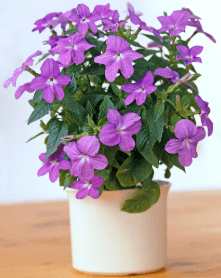
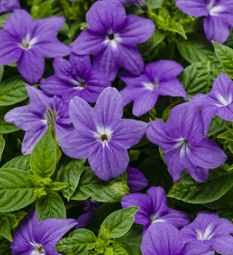
The most attractive feature of this plant is its small, star-shaped flowers, which bloom in shades of purple, blue, and white, or light purple. Due to its ability to tolerate shade, it can be cultivated in areas where sunlight does not reach much.
Taxonomy of Browallia:
Kingdom: Plantae
Division: Angiosperms
Class: Eudicots
Order: Solanales
Family: Solanaceae
Genus: Browallia
Species: B. speciosa
Types of Browallia
Often praised for their bright star-shaped flowers and long blooming season, here are some popular varieties of Browallia. You can add some unusual species to your garden to provide a splash of color from spring to fall.
‘Endless Illumination’ Browallia
This vibrant hybrid features stunning purple-blue, star-shaped flowers that last from spring until the first frost. Compact yet eye-catching, it grows 12 to 16 inches tall and spreads about 10 to 14 inches, making it ideal for containers, borders, or shaded garden beds.
‘Endless Flirtation’ Browallia
A beautiful counterpart to ‘Endless Illumination’, this variety offers crisp white flowers against ornate emerald green foliage. Like its purple-blue cousin, ‘Endless Flirtation’ reaches 12 to 16 inches tall and spreads 10 to 14 inches wide. Its clean color palette makes it a versatile choice for elegant garden designs.
Browallia speciosa ‘Blue Bells’
Often called bush violet, ‘Blue Bells’ is a classic Browallia variety known for its rich blue star-shaped flowers with white centers. Blooming from early summer to early fall, it brings consistent color to shady spots and works well in both containers and garden beds.
Characteristics of Browallia plants
A garden is a celebration of greenery, a splash of color, and a gentle touch of nature. But the beauty of a garden or home is complete when there is a plant that not only blooms beautifully, but is also easy to care for.
This plant is popular around the world for its beauty and easy care. We will find out why you should plant this flowering plant in your garden or home, when and how to plant it, and how to care for it so that it will be full of flowers for a long time.
Why should you plant Browalia speciosa?
Browalia speciosa is not just a flowering plant; it can add color, life, and tranquility to your environment. Below are some of its main benefits:
- Attractive flower color and shape
The biggest feature of this plant is its beautiful star-shaped flowers. The blue, purple, white, or purple-blue mixed flowers are really eye-catching. The small flowers bloom together to make the entire plant colorful, which enhances the spectacular beauty of the house or garden.
- Shade tolerance
Most plants do not do well in areas where sunlight does not reach them — such as balconies, windowsills, or shady gardens — but Browalia speciosa does well in these conditions. It grows in partial to full shade, which distinguishes it as a “shade-loving” plant.
- Long-lasting bloom
Browalia blooms continuously from early summer until the first frost in autumn. That means it will keep your garden or home colorful for almost half of the year.
- Pollinator attraction
The scent and color of its flowers attract butterflies, bees, and hummingbirds. This creates a natural and lively environment in your garden, which also helps pollinate other plants.
- Versatile uses
Browalia can also be used as a hanging tub, window box, garden border, rockery, or table decoration. It even adapts easily indoors, so it is a great option for both indoor and outdoor use.
- Low maintenance
This is a plant that is relatively easy to care for. A little pruning, regular watering, and moderate fertilizing are all that is needed. Moreover, it is generally pest and disease-free, making it an ideal plant for busy gardeners.
- Peace of mind and aesthetics
The presence of colorful flowers brings peace to people’s minds. Studies have shown that being in contact with flowers and plants reduces stress. So if you keep Browallia in your home or office, your mind will also be fresh and calm.
When to plant?
Browallia speciosa is usually a tropical or warm-weather plant. So it is important to consider the weather temperature and frost date when planting it.
Starting from seed: Sow seeds indoors 6–8 weeks before the last frost date in your area.
Planting time: When the outdoor temperature is between 20–24°C and the risk of frost has passed, you can plant the seedlings outdoors.
Where to plant?
Sunlight
- Browwallia can tolerate partial shade to full shade.
- It can tolerate light morning sun, but should be avoided in direct midday sun.
- If you want to plant it indoors, place it near a window that gets indirect light.
Soil
- Light, fertile, and well-draining soil is best.
- A soil pH of 6.0–6.5 produces good results.
- Enrich the soil with compost or well-rotted manure.
Placement
Garden borders, hanging baskets, window boxes, pots, or tubs — it can be planted anywhere.
It is particularly popular as an indoor plant, as it can easily survive in shade.
How to Plant?
- Sow seeds indoors
- Use a high-quality seed-starting mix.
- Press the seeds lightly into the soil surface, but do not cover (light is needed).
- Keep the soil moist by lightly misting daily.
- Germination usually occurs in 14–21 days at temperatures between 21–24°C.
- Seedling Care
When the seedlings have developed 2 sets of true leaves, gradually acclimate them to the outside environment.
Acclimate them by leaving them outside for a few hours each day, for about a week.
- Planting outdoors
- Rub the soil well.
- Dig a hole slightly larger than the root ball of the seedling.
- Gently remove the seedling from the pot and plant it at the same depth.
- Press the soil down firmly so that there are no air pockets.
Care and Maintenance
- Watering
Keep the soil slightly moist at all times, but do not let it become muddy.
Water regularly during the summer.
If planted in a pot, there should be a drainage hole at the bottom.
- Fertilization
Mix a light organic fertilizer at the time of planting.
Using a liquid fertilizer every 2-4 weeks will produce more and brighter flowers.
Avoid excess nitrogen, which increases leaf growth but reduces flowering.
- Pruning
Pinching the tip will make the plant bushier and produce more flowers.
Cut off dried flowers and leaves regularly (deadheading), which will encourage new flowers to appear faster.
- Mulching
Applying 2-3 inches of organic mulch (leaves, wood chips, compost, etc.) at the base of the plant will keep the soil cool and moist.
- Disease and Pest Control
Browalia is generally disease-free, but the following problems may occasionally occur—
- Aphids, thrips or spider mites: Leaves curl or suck sap.
- Neem oil or mild insecticidal soap can be used.
- Fungal problems (leaf spots or powdery mildew):
- Remove affected leaves, clip
- Ensure good drainage, and apply fungicide if necessary.
- Winter care
In cold climates, it is usually grown as an annual.
You can take some cuttings at the end of summer and keep them indoors.
In warmer regions (such as southern Bangladesh), it can survive the winter.
Uses and beauty of Browalia speciosa
- Home decoration: Placing it in the living room, balcony or next to the window brings a colorful touch to the house.
- As a gift: The plant with a small tub can be gifted to a friend or loved one.
- Garden beauty: The blue-purple flowers of the plant bring a unique balance among other green leafy plants.
Some additional tips
- Browalia dries out in too much heat or sun, so do not keep it in direct midday sun.
- If planted in a tub, replant it in new soil every spring.
- If the flowers dry out, prune the plant slightly and new buds will grow again.
- It is useful to spray water on the leaves occasionally to keep insects away.
- If you keep it indoors, you can occasionally move it to a window and give it sunlight.
Conclusion
Browalia speciosa is not only a beautiful flowering plant, but also a great green solution that grows easily in shady places. No matter where it is planted, in the corner of the house, on the balcony, by the window or in a secluded corner of the garden, it will surely bring peace, color and life.
If planted at the right time and taken care of, this plant will be full of eye-catching flowers for a large part of the year.